
PSTN Switch-Off: a no-nonsense guide for UK businesses
VoIP Telephony
 Thomas Mather
Plain English. Zero waffle. Here’s what’s changing, when, and what to do about it.
The short version
- The UK’s analogue phone network (PSTN and ISDN) is being retired for good by 31 January 2027.
- We recommend you aim to move your phone system and internet to a modern solution by early 2026. That gives you time to test kit, train people, and avoid last‑minute drama.
- If anything still relies on a copper phone line, it needs a plan: phones, franking machines, payment terminals, lifts, alarms, entry systems, telemetry, and the list goes on. These will all be rendered useless if they don’t have an internet connection after the switch off.
What’s actually happening?
For decades, landlines ran over the Public Switched Telephone Network (PSTN) where miles of copper designed for voice calls, were installed around the UK. It’s ageing, fragile and increasingly out of step with how we work and business needs. The UK is moving everything to digital, routing calls over the internet (IP).
In practical terms, your phone number and conversations continue, they just travel over your broadband connection instead of an analogue line. This means you get better resilience, modern features, and one less bit of legacy infrastructure to babysit.
What improves when you go all‑IP?
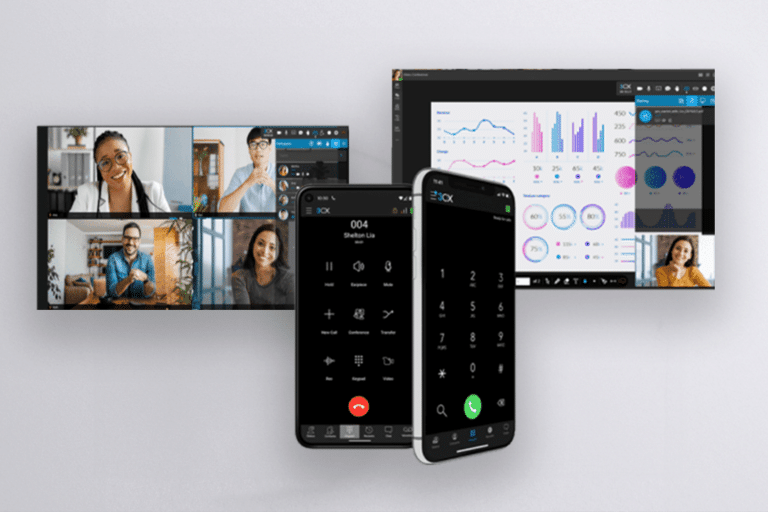
- Work anywhere, on any device: take and make calls on laptops, mobiles and handsets using the same number with what’s called a softphone. This is simply software designed specifically to make and receive calls.
- Cleaner integrations: plug calling into the tools your teams already use (think CRM, Teams, contact centre).
- More control: call routing, hunt groups, analytics, and disaster recovery you can actually configure.
- Less hardware: fewer boxes on the wall, fewer engineer call‑outs, fewer surprises on the bill.
- Integrate AI: Modern VoIP solutions now use AI to detect caller sentiment and give advanced analytics, instant call summaries and even agent guidance in some products.
What needs checking (beyond desk phones)
Create an inventory. Anything connected to a phone socket or that “calls out” needs to be addressed:
- Safety & security: fire and intruder alarms, CCTV diallers, lone‑worker devices, care/telecare units.
- Access & buildings: lift/emergency lines, entry systems, gates and barriers.
- Operations: payment terminals, fax numbers, modems, telemetry, SCADA/monitoring, franking machines.
- Numbers & services: published numbers, DDI ranges, IVRs, call recording, failover routes.
If a device is analogue‑only, you’ll likely need an IP‑compatible replacement or an ATA (analogue telephone adapter) as a bridge, but test, don’t assume.
A simple migration plan
- Audit: list every number, line and device. Note who uses it and why it matters.
- Assess risk: identify anything safety‑critical (alarms, lifts, telecare). Prioritise these.
- Design: choose your target setup — SIP trunks to existing systems, or a cloud phone platform (e.g. Teams‑based or hosted PBX). Plan bandwidth, QoS and power backup.
- Pilot: test call quality, failover, and every critical device. Document what works.
- Migrate: move numbers in waves, train users, run both systems briefly where needed.
- Decommission: cancel unused lines, remove legacy kit, update records and supplier docs.
Need a hand?
We help organisations audit, plan and migrate without the headaches from small sites to multi‑location estates. Get in touch or check out our VoIP products.