
IT Project Delivery
IT projects planned and delivered around your business
Change your IT without stopping your business
Every IT project is a big investment for the business making it, whatever its size. An office move, a new phone system or a move to Microsoft 365 has to happen without breaking anything, pausing anything or stopping you earning. Doing the work while the business keeps running is the real skill in IT project management.
If you have no IT staff, we plan and deliver the project for you. If you have your own IT team, lean on us rather than swamping them. We bring the specialist skills and the people on the ground, so your team can keep up with their day jobs. Our sales and customer success team get to know what you need and our project delivery team make sure you get over the line.
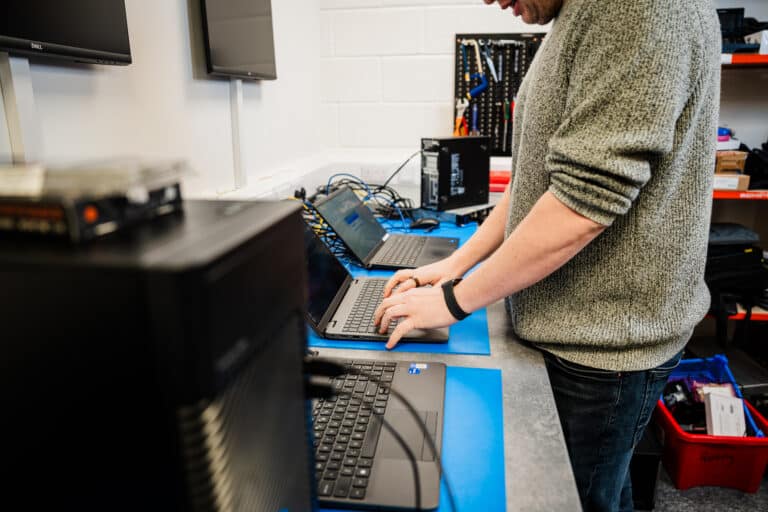
The projects we deliver
Most of our projects start with a change in the business. These are the ones we are asked about most often:
-
Office moves and new sites
Moving office or opening a new site, with the new site joined up to the rest of the business.
-
Phone systems
Moving to a new VoIP phone system, such as 3CX.
-
Microsoft 365 and SharePoint
Moving to Microsoft 365 and a modern way of working, including SharePoint.
-
Cyber Essentials
Getting Cyber Essentials or Cyber Essentials Plus.
-
Hardware replacement
Replacing old equipment the business depends on.
-
Cloud migration
Moving data and servers into the cloud.
-
Networks and connectivity
Upgrading networks, wifi and internet connections.
-
Site audits
Auditing what you have across your sites, so you can plan and budget with confidence.
-
Copilot and AI with guardrails
Introducing Microsoft Copilot with security and governance set up first.
If your project is not on the list, ask us. We will tell you straight whether it is something we do.
Why IT projects go wrong and what we do differently
In our experience, the most common reason an IT project goes wrong is missing information. It is rarely anyone’s fault. Most businesses cannot give a full technical picture up front and nobody should expect them to. The other reason is not looking far enough ahead.
So we ask about your business, not just your technology. Are you planning to move in the next year? Are you growing through an acquisition or getting smaller? Is new regulation on the way? Is there an event or a deadline that cannot move? It might not feel like an IT question, but we need to know what is happening in the business so we can plan around it.
What we learn shapes the plan. If we know you want Cyber Essentials next year, for example, the work we do now is set up with that in mind. Where a small change now would save rework later, we tell you before the plan is agreed.
Projects also stall when the people running them are stretched. Your team still has day to day IT to look after, and a project may need skills they rarely use. We bring the project manager, engineers and specialist skills, so the project has people focused on it from start to finish.

How a project runs
Your project manager explains what we are doing, why and how, in plain terms. At no point should you feel out of your depth and no question is too small to ask.
Every project follows the same steps, so you always know where things stand.
What a well run project gives you is peace of mind
You agree with your project manager how often you hear from us. If you want to change the scope, or something in your business changes the plan, your project manager talks it through with you before the plan is updated.

Keeping your business running during the work
Sometimes planned downtime cannot be avoided. Even then it carries risk. Taking systems down and bringing them back without breaking anything is a skill in itself, so we plan for it from the start.
Scale changes the job too. A single task, such as replacing one piece of network equipment, is rarely complicated on its own. Repeat it 1,500 times across many sites and it becomes a different job altogether. That is where careful planning matters most.
So we plan the work around your calendar, not ours. For one brewery client, that meant working around agreed production shutdowns and inside the client’s own safety procedures. For an office, it might mean working around your busiest weeks of the year.
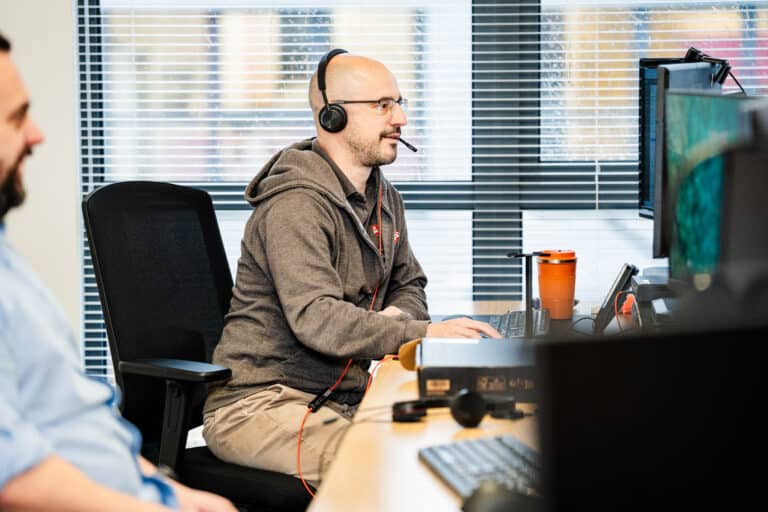
Examples of projects we have delivered
-
Molson Coors: replacing network equipment across UK brewery sites
The challenge: Molson Coors have their own IT team, including project managers, but much of that team is based overseas. They had few people on the ground in the UK and no clear picture of the network equipment, power backup and comms rooms across their UK sites.
What we did: We worked with their project and internal teams to audit every site, from Scotland to Cornwall, over around six months. With that picture in place, Molson Coors could prioritise and budget site by site. They then brought us back to replace the ageing network equipment and, at some sites, the power backup. We scheduled the work around each brewery, sometimes during agreed shutdowns. Throughout, we worked within Molson Coors’ own procedures.
The result: Molson Coors now have a clear record of what they own at each site. Ageing equipment has been replaced around the brewing schedule without disrupting production.

-
Optimas: separating an international business from shared US systems
The challenge: Optimas, a global manufacturer of mechanical fixings, decided to separate their international business from their US business. All of their IT systems sat in the US and the international sites, run from the UK, worked as remote offices. Their own IT people looked after software and everyday support, but a separation on this scale needed infrastructure specialists.
What we did: We designed, specified and built the new setup alongside their internal team. We trained them as we went, because they would be the ones running it day to day.
The result: Optimas’ own team now run the new setup. When something needs specialist skills, they escalate it to us.

-
Drake Circus: new wifi across a shopping centre
The challenge: Drake Circus has a capable internal team, backed by technical experts elsewhere in the group. What they did not have was spare people on the ground for a project the size of replacing the wifi access points across the whole shopping centre.
What we did: We supplied and set up the new access points. We are installing them across the centre to an agreed schedule, including the ones mounted at height.
The result: The centre’s own team stay focused on running the centre. Wifi might be a small part of someone’s job and a project like this should not take over the rest of it.


Planning further ahead
Some projects are one step in a longer plan. Theatre Royal Plymouth came to us wanting to invest in their IT but unsure where to start. The first step was getting a clear view of their equipment. From there, each step makes the next one possible:
-
Step 1
Getting a clear view of the equipment.
-
Step 2
Replacing end of life network equipment.
-
Step 3
Moving data from servers into the cloud.
-
Step 4
A new phone system.
-
Step 5
A modern Microsoft 365 setup, including SharePoint.
-
Step 6
Cyber Essentials.
We are part way through that plan with Theatre Royal Plymouth, alongside the projects their own team runs. A plan like this might stretch over three years, but it is not fixed. We review it with you as your business changes, so the next step fits where you are now. We give you an honest view of where you want to get to and what will help.
Questions about IT projects
-
Timescales depend on the scope and complexity of the work, the number of sites, other suppliers involved, your team’s workload and when you want to start. Before work begins, we agree a realistic delivery plan with you.
-
That is what we plan for. We find out when your busy periods are and which systems you cannot do without, then schedule the work around them. Where something has to go offline, we agree the timing with you first and plan how to bring it back safely.
-
Yes. Many of our projects run alongside an internal IT team. We agree at the start who does what and adjust it if your needs change. If your team needs to escalate anything once the project is finished, we stay on hand.
-
Mostly, but quicker. Because we already support you, we usually know your setup well, so there is less to find out before we start. A smaller job, such as replacing a batch of computers, needs far less planning than a bigger change to your systems.
-
Your project manager agrees how often you will get updates at the introductory call. That is usually weekly or fortnightly, depending on the size and pace of the work. If something is likely to change the scope, you hear about it from us early. You can ask questions at any point and get a straight answer in plain terms.
-
We check that everything agreed has been delivered and confirm it with you. If we support you day to day, your customer success representative takes over from your project manager and adds any next steps to your regular business reviews. If your own team runs your IT, we hand over what they need to look after it. For an agreed period after go-live, we can also provide Hypercare: on-site or remote engineering support, service desk availability and monitoring.

Planning a change?
Tell us what is coming up in your business. It might be an office move, a new system or something you have not fully worked out yet. We will talk it through with you and give you an honest view of what we would do.